The Background Is Not a Secret Code
Learn how to read background details in film, distinguish deliberate emphasis from ordinary setting, and build interpretations that stay close to the scene.
The most common mistake in reading background details in film is treating every visible object as a clue with a fixed meaning. That turns a room into a puzzle and can distract from what the scene emphasizes. Start by describing what the image does with an object before deciding what it means.
Start with the scene’s immediate purpose
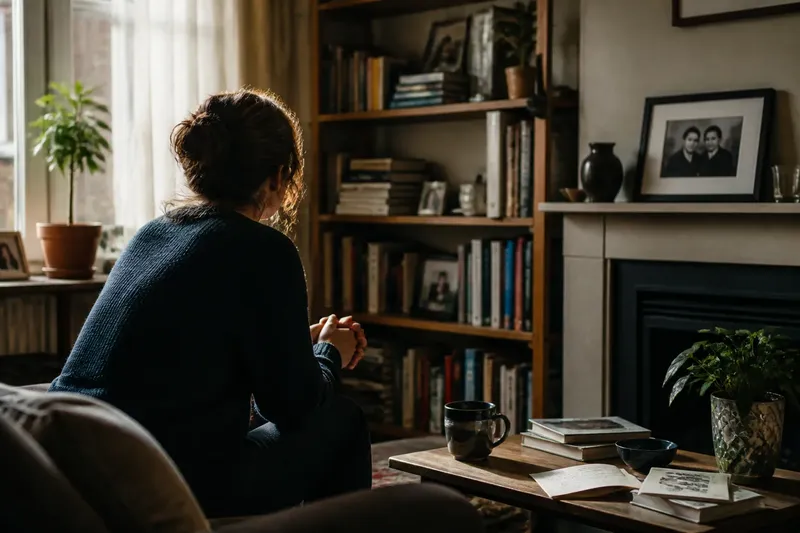
Describe the scene before interpreting it. Who is present? What are they doing? Where does your eye go? A framed photograph behind a character may simply belong to the room. It becomes more suggestive if the scene directs attention to it or connects it to the action.
Keep observation and interpretation separate. “Two people argue beside a crowded bookshelf” describes what is visible. “The books represent their buried knowledge” interprets it. Wait for the film to give you a reason to connect the two.
Setting can establish place, period, occupation, comfort, or disorder without making every object a symbol. A stack of dishes may show that a kitchen is used, not that the household is morally failing.
Check whether the film emphasizes the detail
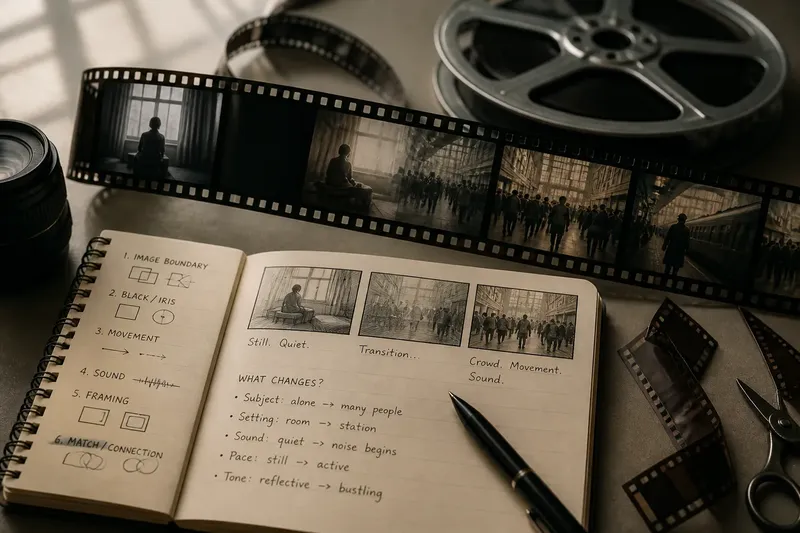
Composition and timing offer useful evidence. A close-up, a character’s glance, a pause, a change in focus, or an unusually clear position in the frame can draw attention to an object. Sound can do the same: an object that makes noise during a quiet exchange may stand out because of the scene’s rhythm.
These signals do not prove a symbolic reading. They show that the filmmakers made the detail easier to notice. Check its practical purpose first. A close view of a door handle might clarify how someone enters or leaves, even if the door also fits a broader theme of access.
Compare the detail with nearby objects. If the camera lingers on one portrait while leaving others indistinct, that difference may matter. If the wall decorations receive similar space and clarity, the portrait may simply be part of the room’s design.
Track recurrence without forcing a pattern
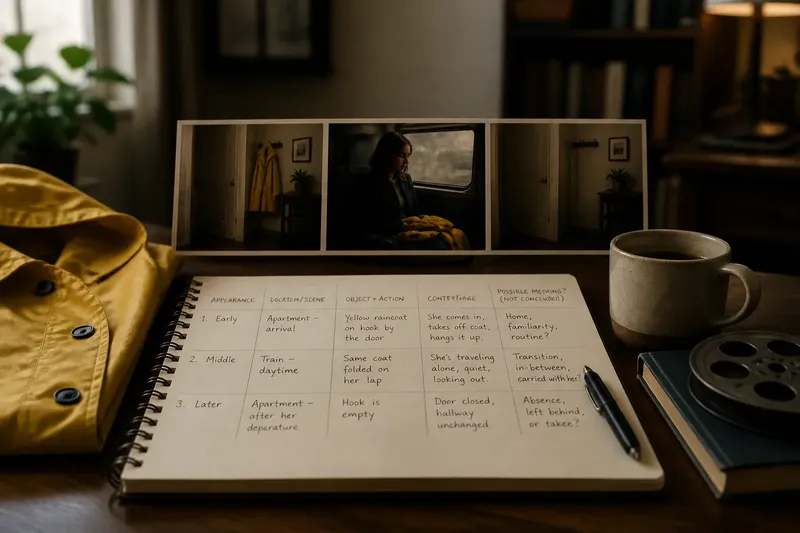
When an object appears again, note where and how it returns. Does it stay in the same room, move with a character, or appear in a new context? Does its visual treatment change? Recurrence can help distinguish a motif from a single furnishing, but repetition alone does not settle an object’s meaning.
Notice the scale of the repetition. A color may recur across costumes, rooms, and lighting, while a specific vase appears only in one apartment. The color could be a broader visual motif; the vase may be a local detail. They need not do the same job.
Focus on what changes. If a background object returns after a character’s circumstances shift, describe that contrast before naming a theme. “The same empty chair appears in two different rooms” is more defensible than “the chair always symbolizes loneliness,” especially if other people occupy it in between.
Separate setting information from interpretation
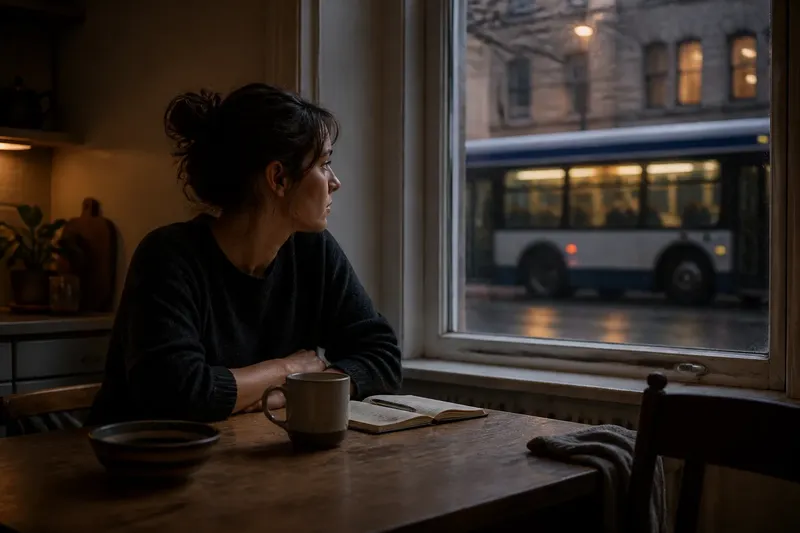
Background details often make a scene legible without becoming symbols. A bus schedule, a shop sign, a desk covered in paperwork, or a family photograph can tell you where people are and how they live. Ask what information the detail supplies, then consider whether the scene adds another layer.
Context matters. A religious image in a place of worship may be expected scenery; the same image in an unexpected location might draw attention, depending on framing and action. A military jacket in a storage room could establish what is kept there. If a character handles it, avoids it, or reacts to it, the object gains a more specific role in the scene.
Do not treat unfamiliarity as evidence. You may not recognize a local product, regional decoration, or ordinary workplace tool. If you cannot tell whether an item is customary, describe its visible function rather than assigning it a cultural meaning. If the film gives no further cue, leave the interpretation open.
Test one reading against the whole scene
Before settling on a meaning, check whether it fits the scene’s action, tone, and other visible details. A reading that explains one object but clashes with the characters’ behavior may be too narrow. A more modest account may fit better: the object contributes to the room’s atmosphere, while the conversation carries the main tension.
Say you notice a cracked mirror behind a character dressing for a meeting. You might connect the crack to a damaged self-image. Then check the image: does the character look toward it, does the camera isolate it, or does it recur? If none of those things happens, the mirror may simply suit a worn apartment. If the film later returns to the reflection during a moment of self-doubt, that new context gives the interpretation more support.
Keep alternatives in view. A detail can be practical and expressive at once. A cluttered desk can make an office feel lived in while also echoing a character’s disorganization. You do not have to choose a single hidden answer when the scene supports more than one function.
What questions help you read a background detail?
Does every visible object have a symbolic meaning?
No. Many objects establish a location, fill out a character’s surroundings, or make a room feel occupied. Look for emphasis or a meaningful connection to the action before treating an item as a symbol.
Does repetition prove that a detail is a motif?
Repetition makes a detail worth tracking, but it does not establish a fixed meaning. Compare its appearances and note what changes in the image or scene around it.
What if two interpretations both seem plausible?
Keep both as possibilities and point to the evidence for each. If one requires assumptions the film never supports, prefer the reading that stays closer to what is visible and audible.
When is a background detail probably just part of the setting?
That is reasonable when the object receives no special attention, does not recur meaningfully, and serves an ordinary practical purpose. “Probably” is enough; a film does not need to resolve every detail.
Keep the interpretation proportional to the evidence
A useful film note can be brief: name the detail, describe how the scene presents it, and state a possible effect. For example, “The unopened mail stays visible behind the speaker, reinforcing the room’s sense of neglect” links an observation to an interpretation without claiming the envelopes have a secret, universal meaning.
It is not worth pausing every scene to decode the wallpaper, each passerby, or every object near the edge of the frame. That effort can turn attention into speculation. Choose details the film makes noticeable, and let ordinary scenery remain ordinary when the scene offers no reason to do more.
When you revisit background details in film, keep seeing and explaining distinct. Repetition, emphasis, and context can support a reading, but none requires you to invent a code. Describe what the image invites you to notice, and stop where the evidence stops.